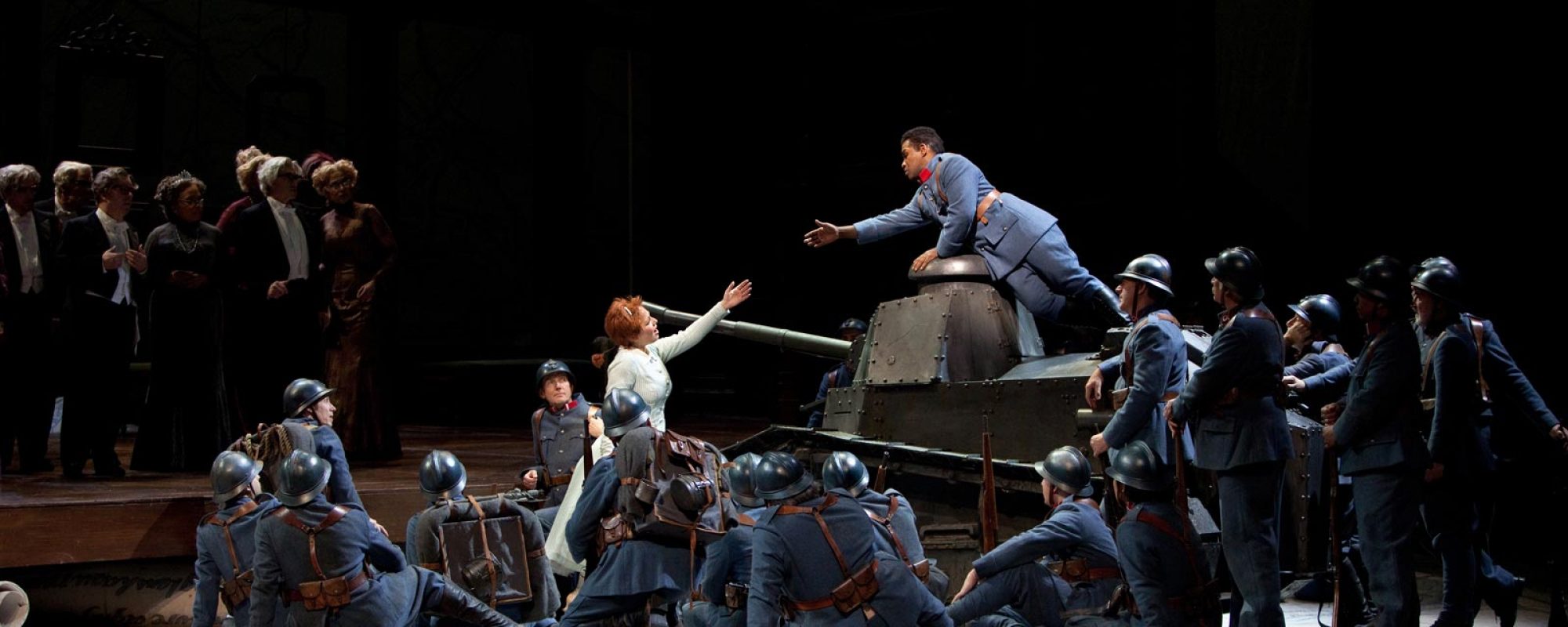
(Photo taken from La Fille du Regiment at the Metropolitan Opera)
In the past, we have looked at individual aspects of La Fille due Regiment — Tonio’s 9 high Cs in “Ah mes amis”, a close examination of the motives behind the Marquise of Berkenfield’s actions, and more. In this post, however, rather than analyzing singular components of the opera, we are going to get a closer look at how some of those components collaborate and combine in order to get a better understanding of La Fille Du Regiment.
When we look at relationships and their dynamics, we often inspect the characteristics of each individual and observe how those characteristics coincide with the traits of their partner. As I analyze the relationship between Marie and Tonio from La Fille du Regiment, I recognize the individual traits of both Marie and Tonio, and consider how those traits have influenced the nature of their relationship.
La Fille du Regiment takes place in Swiss Tyrol in the early 19th century during the Napoleonic Wars. During this time, the patriarchy was incredibly prevalent and women held little to no power in government and in society. It was natural and expected that a man would hold the power and authority in a romantic relationship, and the woman would merely do what is expected of her.
Tonio and Marie’s relationship, however, is a little unorthodox in terms of dominance. Since the start of the relationship, Tonio made it very apparent that he was head-over-heels in love with Marie. Marie, on the other hand, played hard to get and established a facade of indifference. Although she is in love with Tonio — and eventually confesses it — she is initially on the receiving end of admiration. I call this dynamic unorthodox because although today this relationship wouldn’t be out of the ordinary, the time period of the opera makes this relationship quite unusual. Whereas Tonio would typically hold the authority, Marie evidently has Tonio wrapped around her finger and controls the relationship on her terms; she holds the power despite her sexual status. It’s interesting to consider the sexual nature of this, and the unconventional aspects of it. Personally, I love the concept that women can have just as much — if not more — control and authority in a relationship in order create a balance. I believe that an ideal relationship is similar to Tonio and Marie’s: one where a woman can openly speak her mind and not feel inferior to her partner.
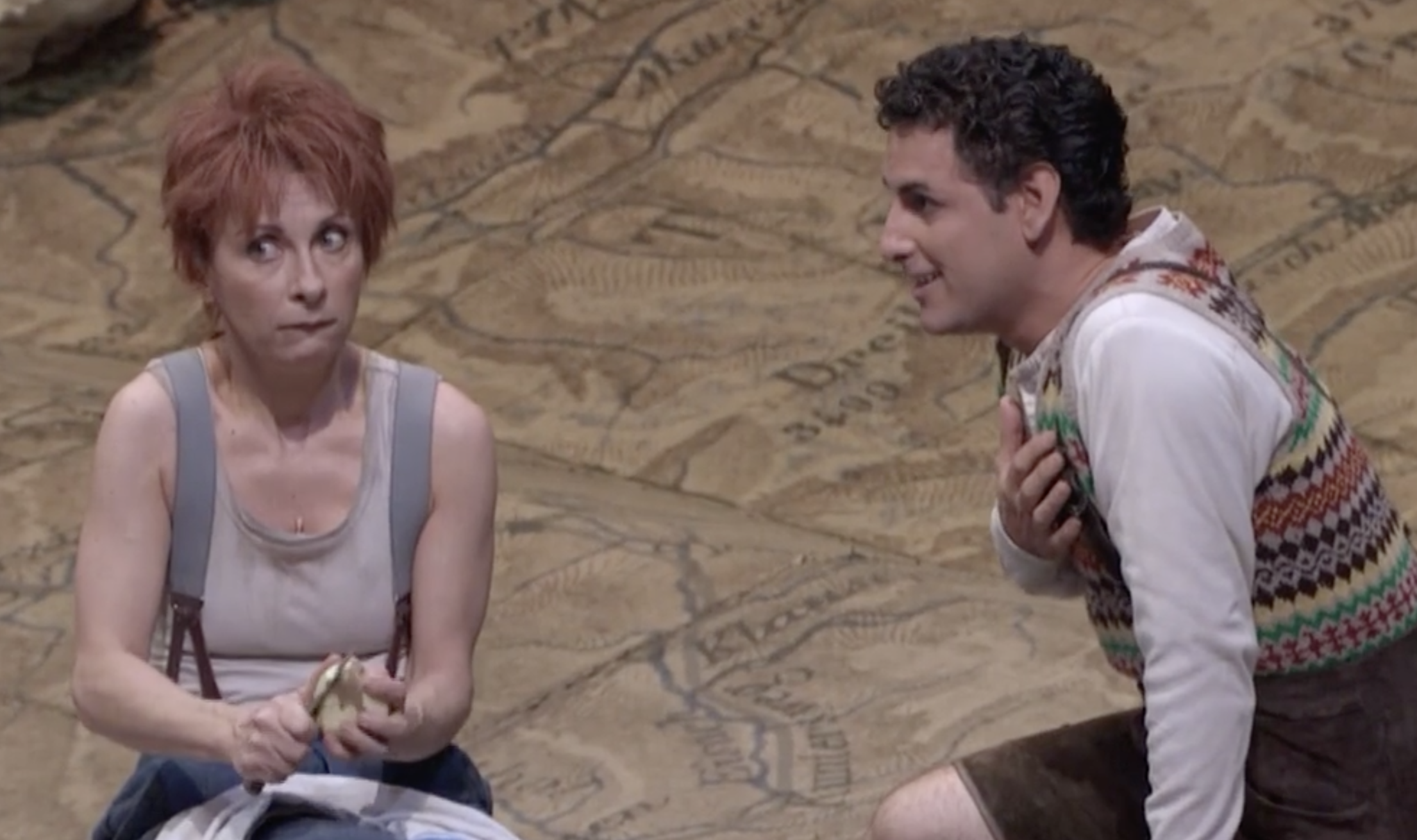
The unique nature of this relationship is accurately illustrated halfway through Act I in Tonio and Marie’s duet “Quoi! vous m’aimez?”, in which Marie is essentially asking Tonio to prove his love for her while she disinterestedly peels a potato. This song perfectly captures the comedic unconventionality of their relationship. Despite the fact that Marie is a woman, Tonio disregards all gender expectations to pursue her: he even gets on his hands and knees to beg for her love. When I first heard this song, I found myself laughing at how ridiculous the dynamic of their relationship was, yet I was charmed by how dedicated Tonio was to winning over Marie’s heart.
Musically, the song represents their relationship as well. Whereas Marie disinterestedly sings staccato notes in a lower range, Tonio’s lyrics are much more dramatic and legato; he even reaches a few higher notes in an attempt to impress the Marie. Also, the song has many tonal changes: sometimes the orchestra plays chords with a more romantic tone and sometimes it plays a more humorous and effortless tune. This represents the ever-changing dynamic of Marie and Tonio’s relationship. Ultimately, it’s evident that the song demonstrates the roles and feelings of each character in their complicated relationship.
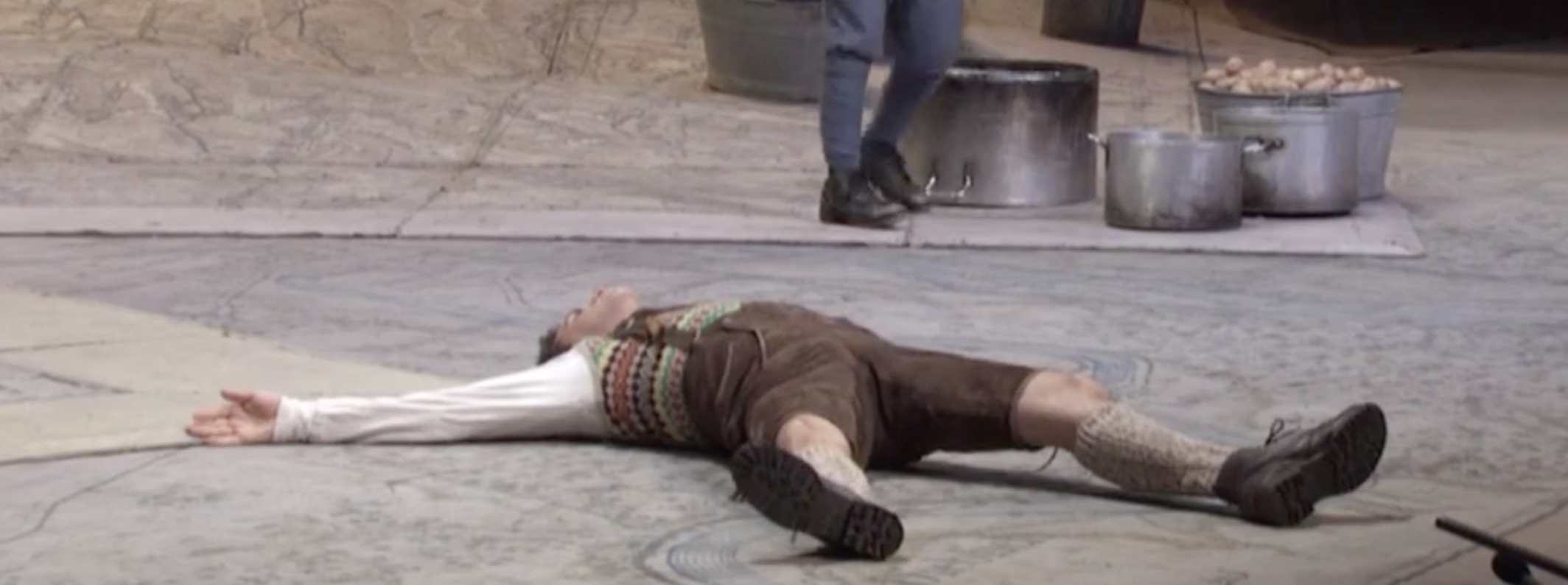
(Photo taken from La Fille du Regiment at the Metropolitan Opera)
In addition to the sexual components of their relationship, Tonio and Marie have a unique set of social circumstances as well. For the majority of the first act, the two lovers are in the same social class: the lowest. As a servant for the army and a women, Marie perhaps holds the lowest position in the hierarchy in this show. Tonio, as a foreigner and seemingly not belonging to any group, also possesses a low social status and is right there next to Marie in the hierarchy. Therefore, in the beginning of the show, their relationship is more practical . However, after Marie realizes her true social class as well as her potential for social mobility, their relationship starts to get a bit more complicated. Although Tonio moves to the lower middle class after moving up in the ranks as a soldier, he still has no power, authority or potential for social mobility. Analyzing Tonio and Marie’s relationship is the second act of the opera is much more unique. Although the Marquise wants Marie to marry the Duke of Krackenthorpe, Marie continues to desire Tonio’s love — despite their drastically different social circumstances. Now in addition to having an unorthodox relationship in terms of gender norms, the two have an unorthodox relationship in terms of the social hierarchy.
Their social relationship a bit more complex, however, due to the nature of their hierarchical positions. It’s obvious from the start that Tonio is helplessly in love with Marie. However, it’s interesting to consider if Tonio had some alternative motive in the second act; perhaps he continued to pursue Marie more intensely because she now had the potential for social mobility, and Tonio — as her partner — would have more power as well. He even goes to the extent of bringing a tank in to stop her from marrying the Duke. I am not doubting Tonio’s love for Marie; I am merely considering that his love might be laced with hopes of a higher social status.
There are several modern day parallels for this type of relationship, especially considering how much power women have gained in society over the past decades since this show was set. Leaning more towards the social status aspect of their relationship, I think of the relationship between Prince Harry and Meghan Markle. Prince Harry, who obviously grew up in a life of royalty, married Meghan Markle, a native from Los Angeles. Although Markle was by no means a modern day “peasant”, she did not come from royalty. Because it is typical that marriage — especially in the higher classes — stays within that class, it was shocking to the public that Prince Harry chose to marry someone from a non-royal family. There are obvious parallels with this specific relationship and La Fille du Regiment, in which Marie — like Prince Harry — chose to marry a lower class man despite their vastly different social statuses.
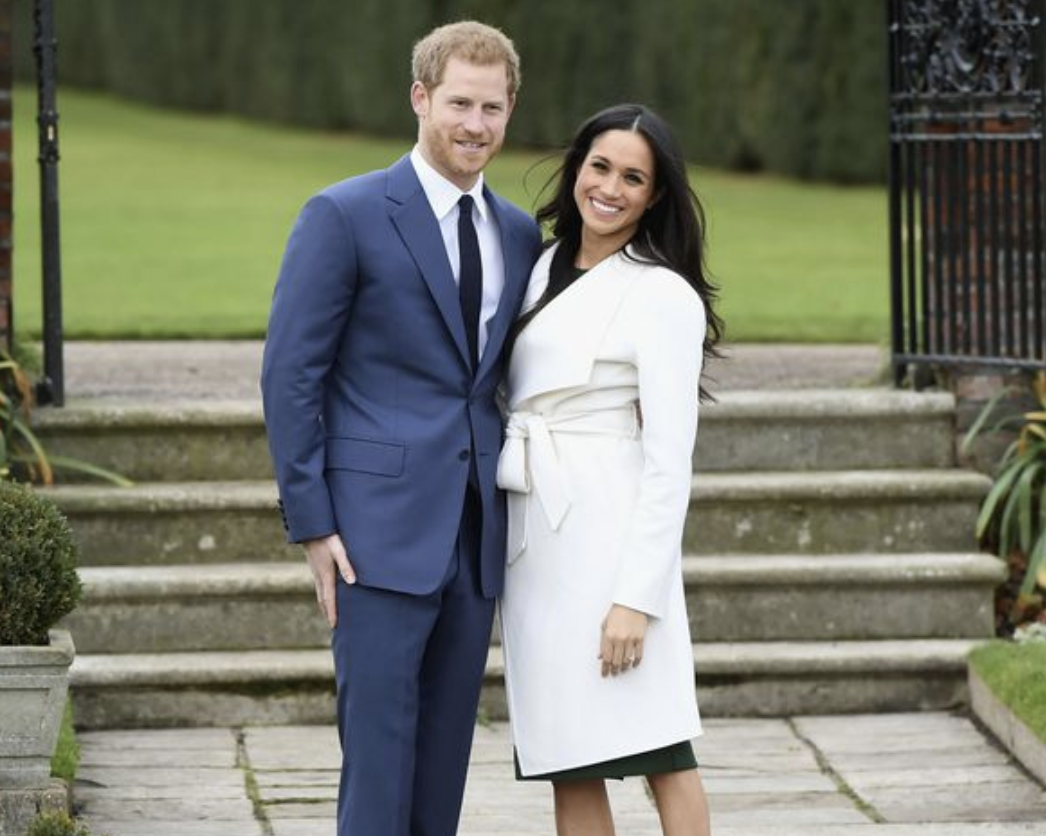
(Photo taken from “Good Housekeeping”; https://www.goodhousekeeping.com/life/relationships/a47735/prince-harry-and-meghan-markle-matchmaker/)
It is relationships like these that prove that in some cases, people like Marie and Tonio do marry solely for love, despite all the societal expectations.
 Leighann's Opera Immersion Blog
I liked your perspective on Marie and Tonio. I also find Marie’s dominance in the relationship to be an interesting challenge to the power dynamics of the time. It was nice seeing you mentioning the possible alternative motive of Tonio in the Second Act. I wonder if the production we’ll see have any indication of this. But anyway, you seemed spot on with their relationship and how their dynamics are always changing. Especially during the one song you mentioned, which was one of my personal favorites in the show. Great blog!
LikeLike
Another “Royal” relationship, which also seems closely related to your points, is that of Edward VIII, King of England in 1936, and his marriage to Wallis Simpson (who was twice divorced!). Check it out! It’s hard to believe it happened, especially at that time. It just wasn’t done …
LikeLike