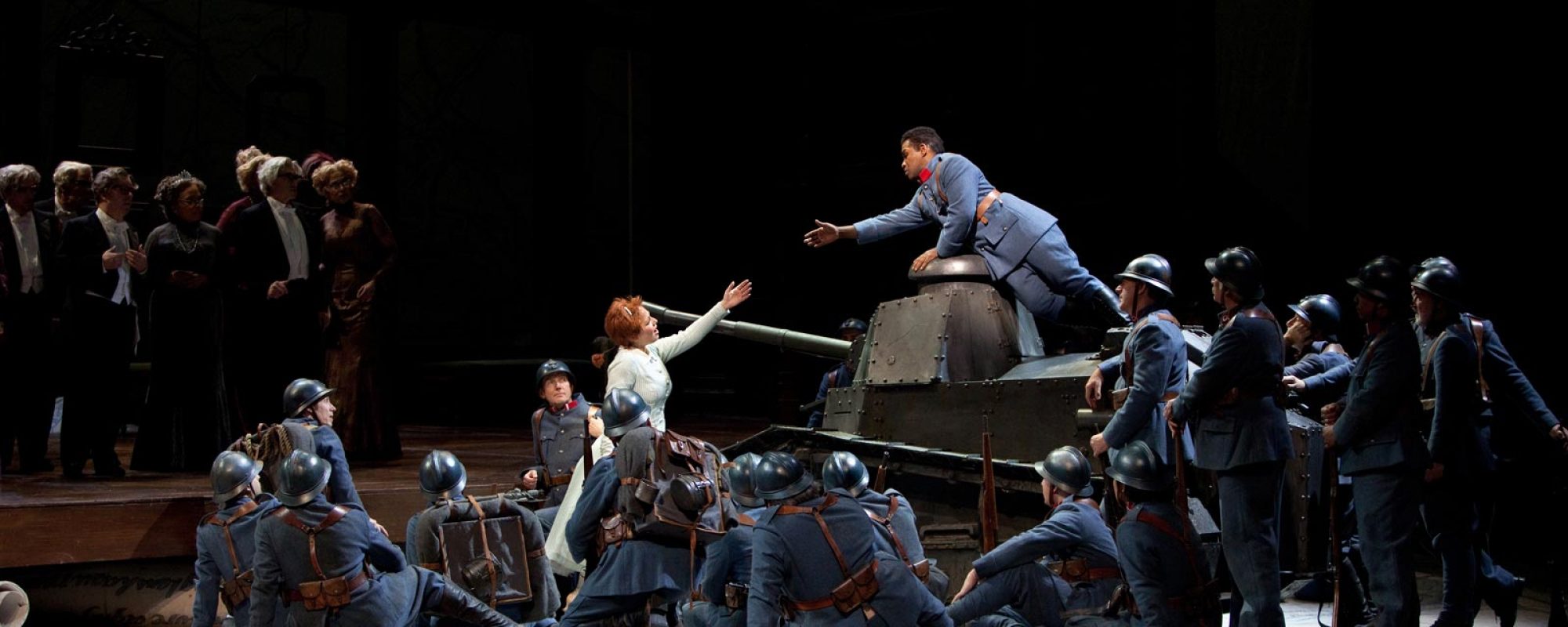
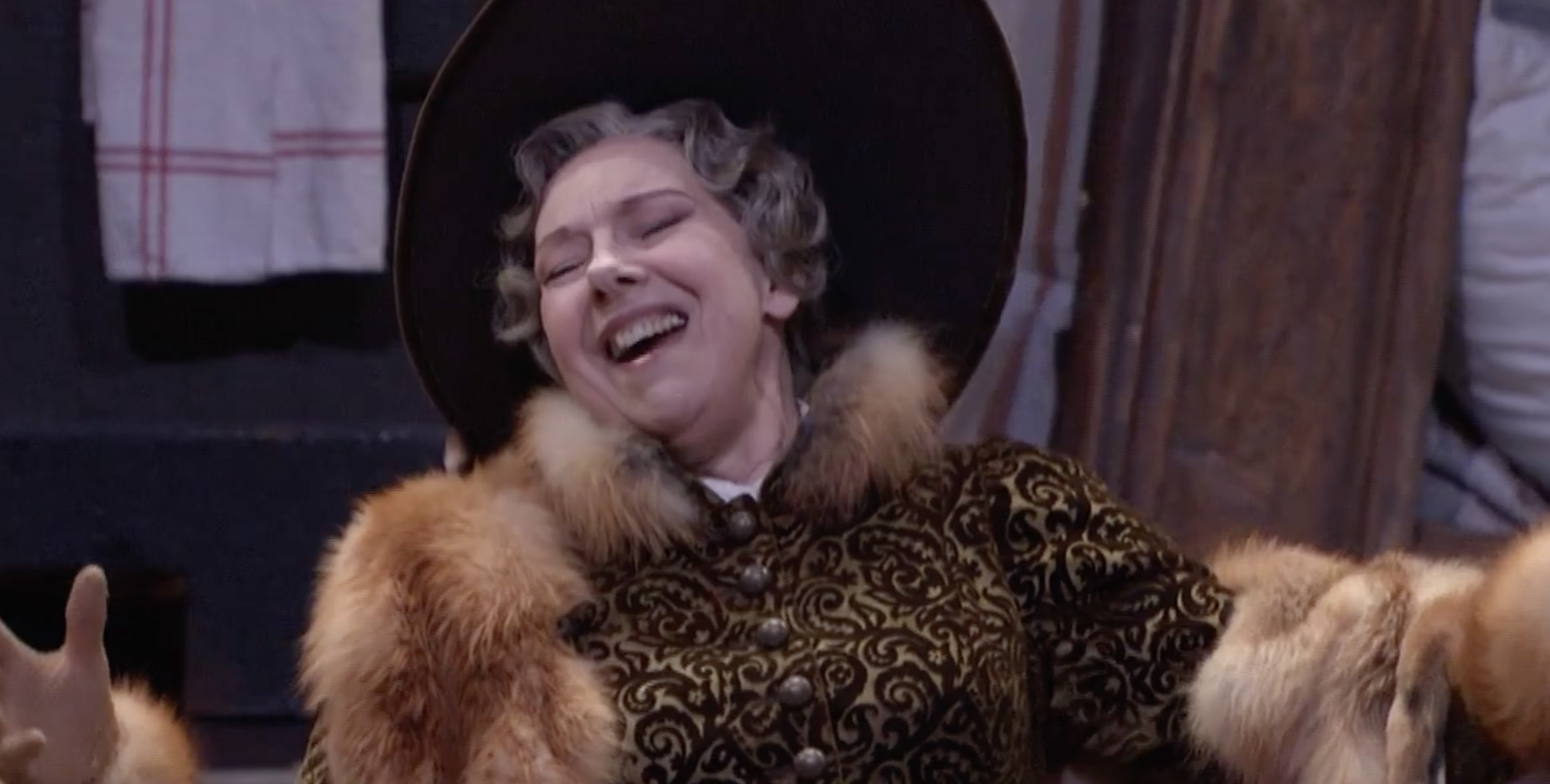
(Photo taken from La Fille du Regiment at the Metropolitan Opera)
After watching the entirety of La Fille du Regiment at the Metropolitan Opera House, I am once again struck by the level of talent and quality of performance exuded by these vocalists. I find it absolutely extraordinary that someone could possess the stamina, dedication, and talent that these performers repeatedly put into this show.
Because there is a small cast of primary characters in this opera, it is easy to identify each character’s values and quirks, and how those values may evolve throughout the show. A particular character that stuck out to me, however, is the Marquise of Berkenfield and the exceptional dynamism of her character throughout the course of the opera.
Although there was obvious character growth within most of the characters, it seemed to be on a slightly smaller scale compared to the Marquise. Marie’s love for Tonio and the Regiment was consistent. Tonio’s dedication to win Marie’s hand in marriage — although admirable — did not waver. The Marquise, however, experienced almost a complete 180° turn in terms of her values, insecurities, and willingness to make sacrifices. As an audience member, I found it fascinating to observe and analyze that 180° spin, and the overall course of her growth.
In the very first scene of the opera, we really get a feel for who the Marquise is and what she values most — her pride. Her behavior with the townspeople in her aria “Pour une femme de mon nom” demonstrates that she is concerned with the the public’s perception of her. For example, she continuously brags about her nobility and beauty, all while singing many exaggerated high notes. Based on her long fur coat, exorbitant hat, and tendency to notice who is watching her, it’s obvious that she thrives off attention. Despite her boisterous attitude, however, her actions, appearance, and lyrics were laced with undertones of insecurity and her fear of judgement. She even goes to the extent of lying about her relationship to Marie to Sulpice, because she had her out of wedlock and is afraid of feeling inferior because of it. Seemingly, the Marquise is determined to maintain a perfect appearance to to maintain her social status as a woman of higher class.
The Marquise’s obsession with appearance extends to her daughter’s appearance as well, demonstrated by her horror of Marie’s improper behavior. She is alarmed by Marie’s swearing, posture, and overall presentation; this leads to the Marquise stealing her away from the regiment in order to make her a “proper lady”. It’s obvious the Marquise is under the impression that society will not accept a women that does not act as a women should. Therefore, in the noble women’s eyes, Marie serves as an obstacle to the Marquise’s goal of maintaining a polished presentation. In addition, she wants the Duchess of Krackenthorp to allow her son to marry Marie, meaning Marie must start acting like a lady to impress her. Ultimately, she aggressively continues to try and make Marie something she is not in an attempt to increase her social standing.
Furthermore, her attitude towards Tonio was initially disgust and condescension; she exclaims that the thought of Marie being involved with a solider makes her “blush with shame”. This is yet another example of the Marquise prioritizing her own pride over Marie’s ultimate happiness. Because she believes that he is not worthy of her daughter’s love, she won’t allow Marie and Tonio’s relationship to continue — despite the fact that Marie expressively reciprocates Tonio’s love.
One of the first times we see a crack in the Marquise’s perfectly kept appearance is her reaction to Tonio’s aria “pour me rapprocher”. Her facial expressions illustrate how moved she is by his serenade and his undying love for Marie. Unfortunately, she conceals this chip in her facade by verbalizing her overwhelming disgust and throwing the soldier out. On a subconscious level, I think this act of aggression is less so towards Tonio, however, and more so towards herself. I think the Marquise is trying to conceal her own compassion by convincing herself of the importance of appearances. Furthermore, this self-consciousness is heightened in the presence of the Duchess. The concept of wanting Marie to marry the Duke of Krackenthorp is a bit complicated; although that want is fueled partially by her wanting Marie to have a secure and comfortable future, it has underlying tones of selfishness in desire to gain more wealth and power for herself. Again, we see that the Marquise has her priorities extremely mixed up. Personally, I believe that the Marquise is somewhat disoriented by Marie and Tonio’s relationship because through her life of aristocracy, she has grown up with the idea that marriage is simply a means to contain power and wealth in the higher social classes. She simply doesn’t understand that Marie doesn’t hold the same values.
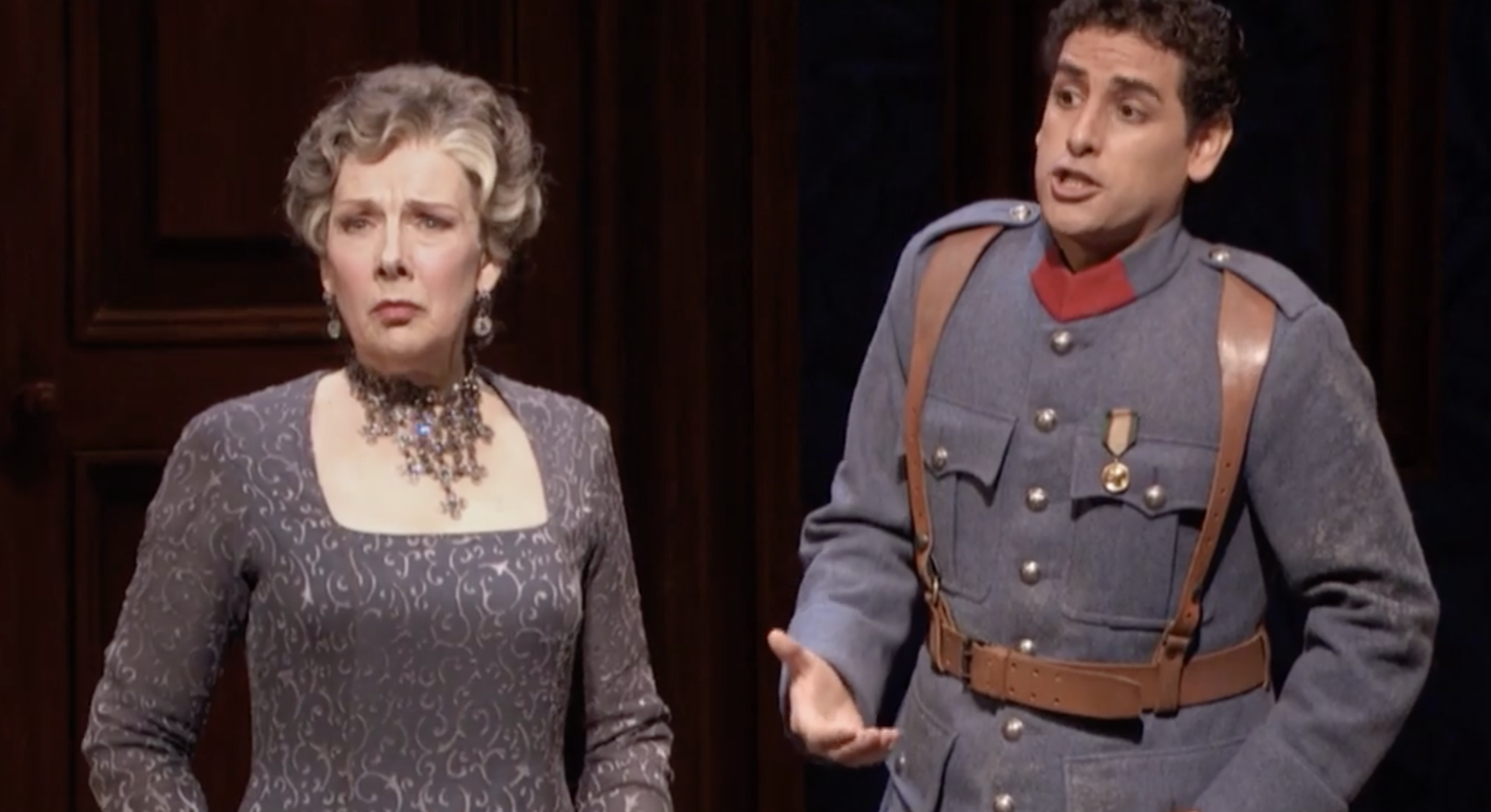
(The Marquise’s emotional response to Tonio’s declaration of love for Marie in La Fille due Regiment at the Metropolitan Opera)
We finally see the Marquise reveal compassion when she witnesses Tonio stop the wedding and profess his overwhelming love for Marie — with a tank, nonetheless. This seems to be what finally cracks her facade and fear of judgement, and she expresses her apologies for trying to control Marie’s life. She states (in French), “how you’ve suffered, dear Marie, and all for me”. The Marquise allows Marie to marry Tonio, and her apparent priority change is confirmed by one phrase that she states at the end of the opera: “Enough of pride!” This proves her acknowledgement that relationships shouldn’t be determined by social status, but rather love in its truest form.
The Marquise’s character growth is demonstrated through her vocal disparities among songs through the opera as well. In the first song, her lyrics are elongated, almost dramatized in her performance. This parallels her desire for attention and a perfect appearance. However, her voice changes towards the end of the opera. Although she still sings in her mezzo-soprano range, her songs are more simple and less exaggerated after she admits to Sulpice that Marie is her daughter. This exemplifies her diminishing concern with society’s judgement and her appearance at the end, and further proves that the character’s level of compassion has evolved throughout the performance.
Although we all resemble the Marquise sometimes, — through our selfishness and fear of judgement — it’s important that we recognize the importance of compassion and love, and acknowledge that appearances aren’t always as important as they seem.
 Leighann's Opera Immersion Blog
What a great analysis of the Marquise! You hit every change in her character throughout the play. I definitely agree that her goal toward the beginning was to keep up and even improve her status and appearance. However, she is forced to change this goal as Marie starts to show her new life values. I particularly loved your paragraph analyzing the change in her vocal performance. I did not pick up on her shift from long, dramatic phrasings, to shorter, simpler ones. Those vocal nuances really mirror her change in character throughout the opera. There were a lot of bumps in the road for her that influenced her change, but I think we can say they her shift in goal was for the better. Great analysis!
LikeLike
Leighann, you rocked this analysis!! One of my favorite lines was when you wrote: “On a subconscious level, I think this act of aggression is less so towards Tonio, however, and more so towards herself.” I never would have thought this until I read your blog and it all makes sense!
Just generally, I love how you described the shift in the Marquise’s goals in such detail. I agree with Jenna too that I did not pick up on the changes in the music/from a vocal standpoint, so kudos for recognizing that. Overall, I think you hit the nail on the head when discussing how the Marquise experiences a change of heart and lets go of her pride/status/need for a perfect image, and sees the importance of accepting love!
LikeLike
Thank you very much for your entry. I have to wonder how much easier it is for us (folks of the 21st century) to move between classes than it was back then? And how much easier or harder it is to decide to abandon societal class expectations in the name of love? Is it easier? Is it the same? What about for women versus men? Something fun to discuss further!
LikeLike